Grow Your Own: Why LOI Clubs Must Back The Academy
The League of Ireland is finally making serious money from young players. If that’s where the game is heading, why aren’t more clubs spending now to produce the next Mason Melia?

There was a time when a League of Ireland club getting six figures for a player felt like very good business.
Séamus Coleman left Sligo Rovers for Everton for a relatively modest reported fee. Dawson Devoy went from Bohemians to MK Dons for around £150,000. Eoin Toal left Derry City for Bolton for a similar sort of figure. Good deals, certainly, but rarely the sort that allowed a board to suddenly start thinking three or four years ahead.Then Mason Melia happened.
St Patrick’s Athletic agreed a deal worth around €1.8 million upfront for the teenager to join Tottenham. Shamrock Rovers then went higher again, agreeing a guaranteed fee of roughly €2 million for Victor Ozhianvuna to join Arsenal.
Their deals could reportedly climb beyond €4 million each through add-ons, while sell-on clauses give their clubs the chance to earn again later.
The two biggest transfers in League of Ireland history have one fairly important thing in common.
Neither club bought the player.
They developed him.
And the conversation around young League of Ireland players has changed with it.
It’s no longer just: “How long do you reckon we keep him?”
Someone normally has another question now. “How much would you take?”
That’s a much better problem to have.
But it also leaves Irish clubs with a fairly obvious question. If academy graduates are becoming one of the best ways of making real money in this league, why aren’t we spending more now to produce the next one?
You Have To Plant Something First

Academies aren’t free.
There are coaches, pitches, physios, gym programmes, analysts, transport and education to pay for. Not every teenager becomes a first-team player either. Plenty won’t get close.
But the economics are completely different to senior recruitment.
Spend €80,000 on an established player and you’re investing in one player. Spend that money improving academy coaching, facilities or contact hours and you’re potentially improving 20.
It’s a bit like planting an apple seed.
You don’t put one in the ground on Tuesday and start complaining on Friday because there’s no apple waiting for you. You give it time and, if you do it properly, eventually you’ve got a tree producing plenty of them.
Melia is one particularly valuable apple.
But he didn’t appear from nowhere.
By May 2025, 261 players had passed through the St Pat’s academy. 114 had represented Ireland at underage level, 84 had reached senior first-team football somewhere and 28 had played for Pat’s themselves.
The coaching numbers are even more revealing.
FAI figures put average academy contact time at around 230 minutes per week. Pat’s were providing approximately 450 minutes at U15 level and 705 at U17, more than three times the national average for their older group. That puts them on par with English Category 3 academies such as Bolton and Preston.
Mason Melia wasn’t produced because somebody in Inchicore discovered a magic cone drill.
They gave players more time to get better.
Development Doesn’t Mean Starting Kids Every Friday
This is where academy conversations can get a little silly.
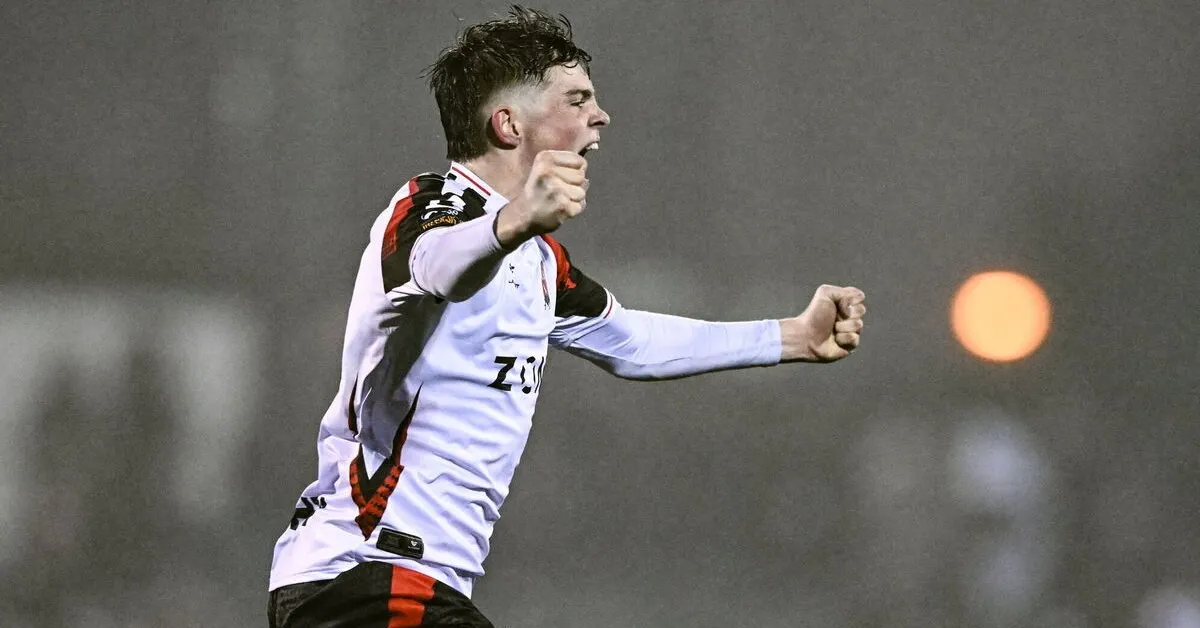
Investing in young players doesn’t mean a manager should reach a relegation six-pointer and throw three 17-year-olds into the starting XI because somebody upstairs has discovered the phrase “player trading model”.
Managers still have to win football matches.
Senior football for an academy graduate doesn’t necessarily have to come at his parent club either.
Loans matter. First Division football matters. Twenty-five proper senior games can be worth considerably more than another year being brilliant at underage level.
Vinnie Leonard is probably the best example of what the pathway can look like when it works.
Before Ireland went to the 2025 U17 World Cup, that squad had accumulated more than 13,000 senior club minutes between them. Leonard alone accounted for just over 3,000, nearly a quarter of the total. He made his Dundalk league debut in October 2024, became an important part of their 2025 First Division promotion campaign, was named in the PFAI Team of the Year and then earned a move to Norwich City.
Not to mention his academy teammate, Sean Keogh, who was picked up by Brighton while Dundalk were in the First Division, earning the Louth Side around €150,000. He has since helped Brighton win the U21 Premier League title.
That’s the pathway clubs should be trying to build.
Academy football. Senior minutes. Proper responsibility. Performance. Then, if the player is good enough and the contract is right, a transfer.
And Leonard did most of that in the First Division. You don’t need to throw a teenager into a title race or Europe to develop him. Sometimes a promotion battle in Louth is more useful than another season being the best player in the under-20s.
That bridge between academy and first team should be part of the investment.
Otherwise you can spend six years developing somebody, get him to 18 and suddenly realise nobody has worked out what happens next.
And Ireland has plenty of catching up to do before that stage anyway.
The Government-backed Double Pass audit found only 4% of League of Ireland clubs had a full-time head of coaching, compared with 46% among clubs in comparable football nations. Not one LOI club had four or more full-time academy coaches. Among the benchmark countries, 36% did.
Only 23% of Irish academies had access to indoor facilities, against between 61% and 81% internationally. Comparable countries were also giving U16 to U21 players around two extra training sessions every week.
We’re already producing €2 million footballers from that.
You’d have to wonder what happens when the structures actually catch up.
This Isn’t Just A Dublin Thing
The easy response is that Shamrock Rovers and St Pat’s can afford all of this.
They’re in Dublin, have huge recruitment areas and are operating towards the top end of Irish football.
So look at Sligo.
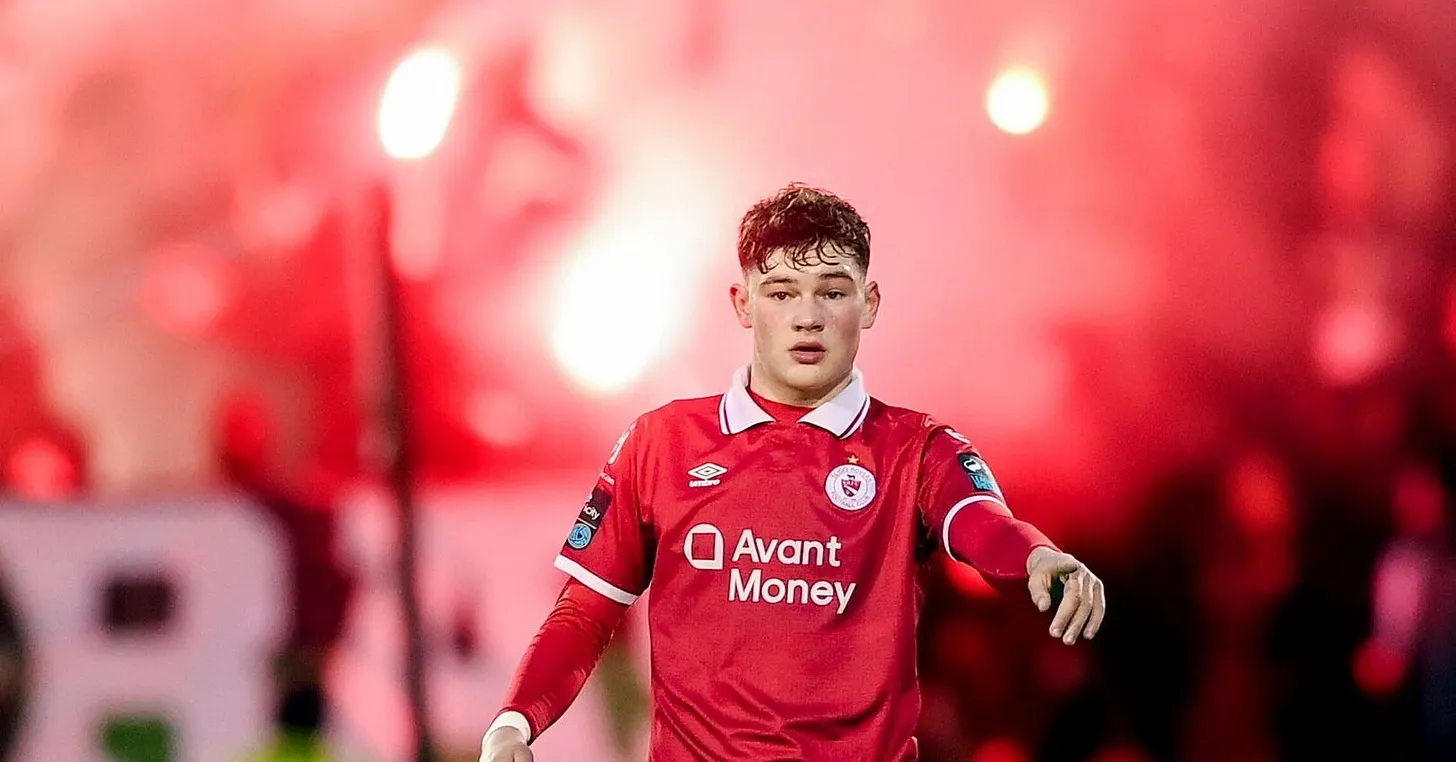
Owen Elding joined Sligo Rovers as a 12-year-old. In 2025 he scored 16 goals in 38 games in all competitions, including 12 in the league, won PFAI Young Player of the Year and was named Sligo’s Player of the Year. His league goals were vital as Rovers stayed up.
Then Hibernian bought him.
Sligo described the deal as an initial significant six-figure sum, with the potential to rise to seven figures, while a sell-on clause means they could benefit again.
That’s the bit clubs should really notice.
Elding didn’t just make Sligo money when he left.
He gave them goals first.
An academy graduate can help keep you up, win promotion or get you into Europe before anybody writes the cheque.
Then, if you’ve got the contract right, you get paid too.
Quite a useful employee.
So Where Does The Next €100,000 Go?
This is why the timing feels different.
Budget 2026 provided €3 million in multi-annual Government funding for League of Ireland academies. Yet the FAI had asked for €4.45 million, arguing that would allow every academy to employ at least three full-time staff.
Its longer-term ambition went further again, towards significantly greater annual investment and academies eventually generating enough transfer income to help fund themselves.
In other words, Irish football is starting to plant the tree.
The question now is whether clubs keep watering it.
Nobody is suggesting they stop signing experienced footballers. If you’re bottom in September, the 32-year-old centre-half with 300 senior appearances might be considerably more useful than an academy presentation telling you about 2029.
Sometimes that signing keeps you up.
But when the next €100,000 becomes available, the conversation shouldn’t automatically begin and end with the first-team squad.
Could it hire another coach? Increase contact hours? Improve facilities? Fund loans? Help regional players travel? Put longer contracts around the best prospects? Develop a player education programme?
None of those will have supporters refreshing Twitter at 11pm waiting for an announcement video.
But neither did the work that produced Melia.
There will be academy players who never make their club a cent. There will be mistakes, late developers and teenagers who leave for Europe before clubs see much return.
That’s football.
But Melia, Ozhianvuna and Elding are showing what happens when it does work.
So by all means, sign the 34-year-old midfielder coming home if he makes your team better.
Just don’t spend every spare euro making Friday night slightly easier and then wonder five years later why somebody else is selling the next €2 million footballer.